Dry Needling
Target trigger points, ease muscle tension, and move with greater comfort.
San Tan Physical Therapy provides safe, effective dry needling as part of a personalized plan to help restore muscle function, strength, and pain-free range of motion.
What Is Dry Needling?
Dry needling is also known as intramuscular stimulation (IMS) and trigger point dry needling (TDN). It is a safe, effective, and efficient treatment used to relax myofascial trigger points and restore normal muscle tone, muscle length, coordination, function, and strength.
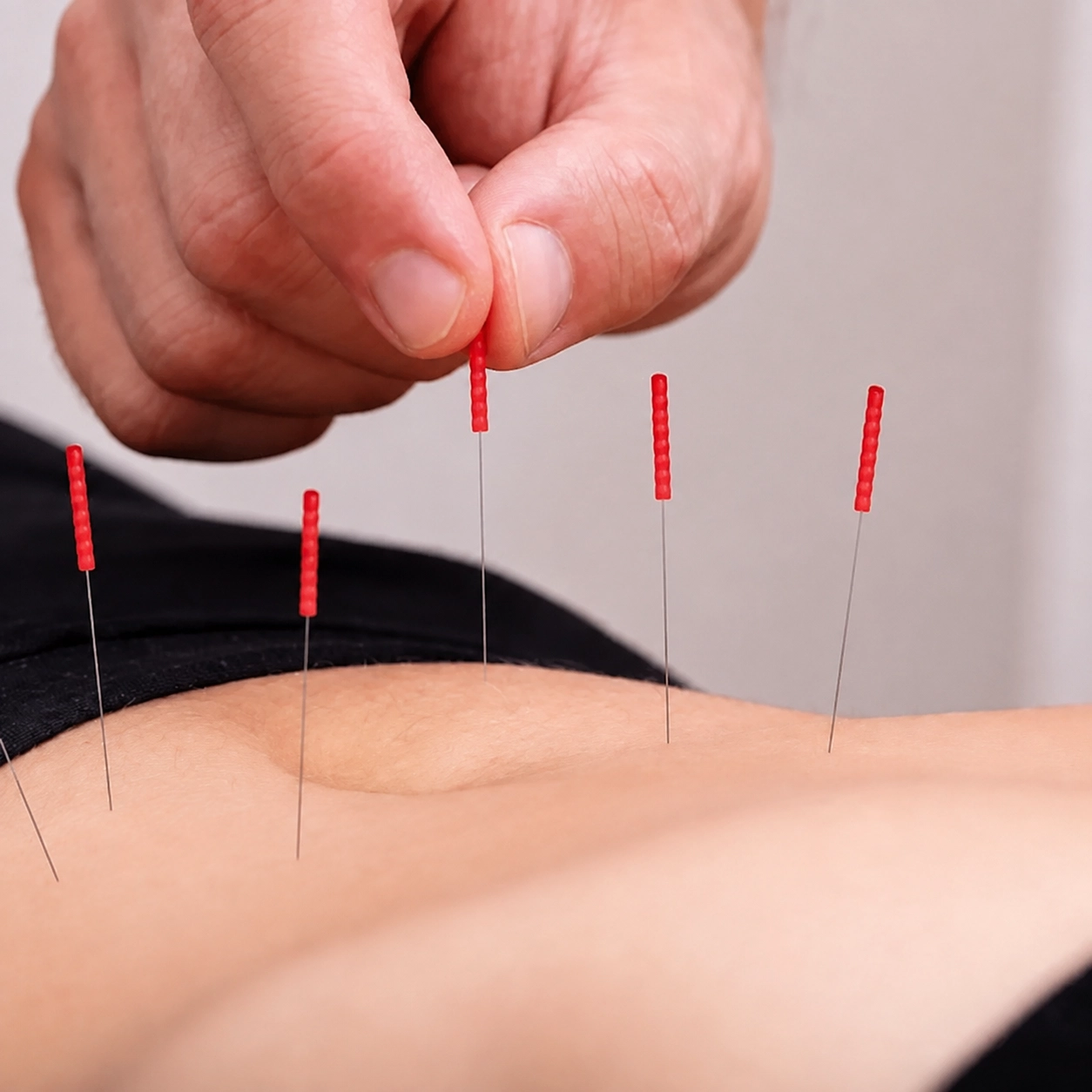
During treatment, your physical therapist inserts and repetitively manipulates a dry, solid filament needle in a trigger point. This is intended to produce an involuntary spinal cord reflex known as a local twitch response (LTR).
The response can create lasting muscle relaxation by releasing shortened bands of muscle fibers in overactive, tight muscles or activating under-active, weak muscles. When trigger points are deactivated, symptoms may improve immediately, allowing your therapist to begin training the muscles with the newly gained pain-free range of motion.
How Dry Needling Supports Recovery
Dry needling is used to address muscle trigger points so your rehabilitation can progress with improved comfort and movement.
Release Trigger Points
Targets myofascial trigger points and shortened bands of muscle fibers that can contribute to pain and restricted movement.
Restore Muscle Function
Helps restore normal muscle tone, length, coordination, function, and strength in tight or under-active muscles.
Build on Pain-Free Motion
After trigger-point deactivation, your therapist can immediately work with you to train muscles in the newly gained pain-free range of motion.
Dry Needling vs. Acupuncture
Dry needling is similar to acupuncture in that a dry, solid filament needle is inserted and manipulated under the skin to release endorphins and serum cortisol for pain relief.
The approaches differ in their foundations. Dry needling is based on western neuroanatomy and modern scientific study of the musculoskeletal and nervous systems. Acupuncture is based on traditional Chinese medicine and seeks to create balance in the body by influencing the flow of Qi, or energy, through pathways called meridians to achieve pain relief and alleviate inflammation.
Conditions Treated by Dry Needling
Dry needling has successfully been used to treat a variety of conditions. Your physical therapist will determine whether it is appropriate for your individual needs and rehabilitation plan.
Head, Neck & Jaw Pain
May help with head and neck pain, whiplash, headaches or migraines, degenerative joint or disk disease, osteoarthritis, TMJ dysfunction, and jaw or occlusal pain.
Shoulder, Elbow, Hand & Wrist
Used for shoulder pain including rotator cuff tears, bursitis, frozen shoulder, tendonitis, and impingement, as well as tennis elbow, golfer’s elbow, carpal tunnel syndrome, and DeQuervain’s syndrome.
Back, Hip, Knee & Foot
May be used for back and hip pain, lumbar degenerative disc disease, arthritic changes, herniated discs, knee osteoarthritis, shin or ankle pain, and plantar fasciitis.
Tendon & Sports Injuries
Dry needling may be part of care for acute and chronic tendonitis and athletic or sports-related overuse injuries.
Post-Surgical & Trauma Recovery
May be considered for post-surgical pain, post-traumatic injuries, motor vehicle accident injuries, and work-related injuries.
Chronic Myofascial Pain
Dry needling has also been used for other chronic pain conditions, including myofascial pain and myofascial pain syndrome.
Explore Dry Needling at San Tan Physical Therapy
Our Queen Creek team provides one-on-one evaluations and personalized care plans designed to help you improve strength, mobility, and confidence. To learn more about dry needling services, call (480) 677-2771 or request an appointment.